


Saigon Zoo & Botanical Gardens Joins Hands in Wildlife Conservation
Conserving nature is part of protecting a sustainable future for people Vietnam is recognized as one of the countries with high biodiversity in the world. From tropical forests and wetlands to mountain ecosystems and coastal habitats, each landscape supports a rich variety of plant and animal life. However, alongside socio-economic development, many wildlife species are facing serious population decline.
CONSERVATION EFFORTS FOR A NATURAL HERITAGE SPECIES AT SAIGON ZOO & BOTANICAL GARDENS
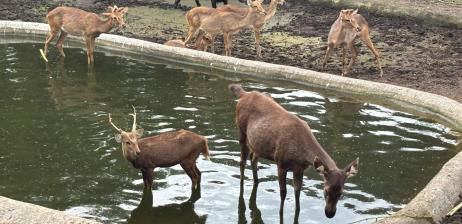
A long journey shaped by dedication and important milestones Building up the population The conservation journey began in 1995 with only a very small founder population of four hog deer (Cervus porcinus Zimmermann), including two males and two females. During the first four years, the herd did not reproduce, which required even greater effort, patience, and specially tailored care to help the animals adapt to their environment. Through these continued efforts, the hog deer population at Saigon Zoo & Botanical Gardens gradually began to breed successfully and consistently, with numbers increasing significantly over time. As the population grew, some individuals were transferred to other institutions for exhibition and conservation purposes, including Phu Quoc Safari in 2016.

CONSERVATION OF THE CRESTED ARGUS (RHEINARDIA OCELLATA OCELLATA) AT SAIGON ZOO & BOTANICAL GARDENS
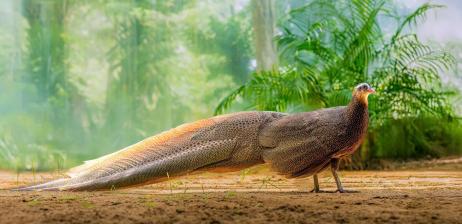
When the “stars of the forest” are in danger The Crested Argus is far more than a beautiful bird with a clear, elegant call. It is a remarkable endemic treasure of Southeast Asia, found only in Vietnam and Laos. The species was first named Argus ocellatus by Elliot in 1871, based on a large number of pheasant feathers of unknown origin preserved at the Paris Museum. Earlier, between 1835 and 1859, Verriaux had also used the name Argus ocellatus in manuscript form (according to Delacour, 1951). It was not until 1879 to 1881, when two skins of the Crested Argus collected by Commander Rheinart and the Governor of Cochinchina were confirmed to have originated from Vietnam, that the species’ true geographic origin was officially recognized. The genus Rheinardia was later established in 1882 by Maingonnat (G.W.H. Davison et al., 2020).